

Complete Guide to Peaberry Coffee
If you've ever seen peaberry coffee on a cafe menu or store shelf and wondered what it is or why it comes with a higher price tag, this peaberry guide is for you. Learn about what makes peaberry coffee unique compared to other beans, and tips for trying, buying and brewing the best quality peaberry at home.
What is Peaberry Coffee?
When it comes to coffee, the word peaberry describes the coffee bean itself, not the origin or variety. Also referred to as caracol (Spanish for snail), peaberry coffee is a naturally occurring mutation present in arabica and robusta coffee varieties where only one bean develops inside of the coffee cherry instead of two. Peaberries occur in coffee varieties and growing regions worldwide, including Hawaii’s growing regions and coffee farms from Kona to Kauai.
Peaberry Coffee in Hawaii
So, what makes Kauai Peaberry Coffee stand out? It comes down to the environment, the agricultural processes, and the aloha our team puts into everything they do. Kauai Coffee beans grow in rich volcanic soil, kissed by tropical sunshine and cooled by gentle island breezes. That combination gives our peaberry beans a smooth and satisfying flavor profile.

Peaberry Coffee from Other Origins
Tanzania is another growing region in Africa, often noted for its peaberry harvests. Tanzanian peaberry coffees are often celebrated for their deeper, wine-like acidity and bold fruit notes. Coffee from both origins is prized, but Kauai Coffee Peaberry carries the added distinction of being triple certified by leading sustainability advocates and grown, harvested, roasted, and shipped directly from our Kalaheo estate. That vertical integration means every step from seed to cup is guided with care.
No matter what Peaberry Coffee you choose to try, the joy lies is in discovering how this rare mutation expresses itself differently depending on where it grows and how it is roasted. Each cup will tell a story of place, process, and passion.
Anatomy of a Peaberry Coffee Cherry
To better understand exactly how a peaberry is different from other coffee beans, it is essential to know a bit about the anatomy of a coffee cherry. The coffee beans you use for your morning coffee are the processed and roasted seeds of the coffee fruit.

Left: Cross-section of a coffee cherry with two seeds inside. Center: Cross-section of a peaberry coffee bean inside the coffee cherry. Right: Cross-section of a coffee cherry with three seeds.
Several layers of fruit and skin protect coffee seeds. The outermost surface of the coffee cherry is called the exocarp. Underneath the exocarp lies the mesocarp, a thin layer of fruit pulp. After the pulp, coffee beans are covered by a slimy layer called the parenchyma and then a papery endocarp, more commonly known as the parchment.
Usually, two flat coffee seeds are formed inside of the parchment layer in most coffee cherries and covered by yet another thin membrane called silver skin. However, in a peaberry coffee cherry, one seed fails to grow, and a singular round seed is formed instead. It’s not well known why this natural mutation occurs in 5-10% of harvested coffee cherries, but some theories suggest that environmental conditions or insufficient pollination could be contributing factors.

Harvesting Peaberry Coffee
From the outside, coffee cherries that contain peaberries and coffee cherries that have two seeds look the same and are harvested in the same way. We use mechanical harvesters to collect up to 180,000 pounds of coffee cherries per day from the 3,100-acre Kauai Coffee farm. Once the cherries are harvested and dried, the peaberries are sifted from the larger beans, roasted, and packaged separately.

Sorting Peaberry Coffee Beans
There are many methods for sorting peaberry beans. Some small farms may use manual methods such as a series of screens and sieves with different-sized holes that allow the smaller peaberries to pass through. Larger farms usually rely on mechanical methods. At Kauai Coffee, we use machinery to sort the beans. Green beans go through a huller and then across vibrating tables with screens on them that sort the beans into different hoppers. The peaberries are sifted out because of their unique shape.
Roasting and Taste
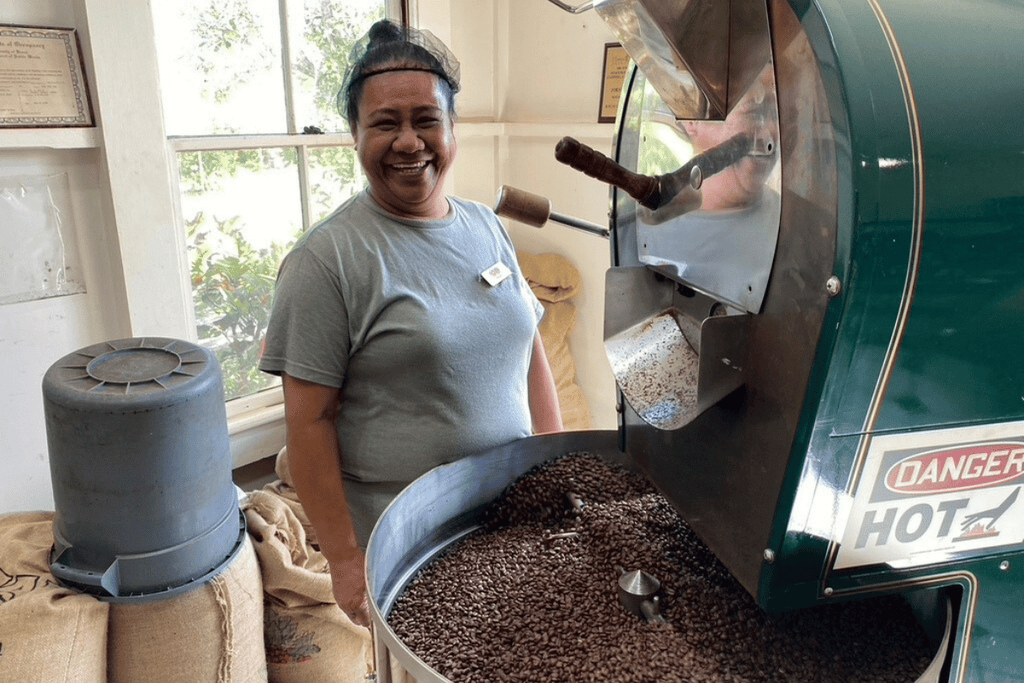
Because peaberries are the only seed inside the coffee cherry, they tend to be smaller, rounder, and denser than their two-seeded counterparts. These characteristics can affect how evenly the bean roasts, which can affect the flavor. Peaberry lovers and some professional coffee graders also believe that because the single peaberry bean receives all of the nutrients of the coffee cherry rather than sharing with another seed, peaberries can have more caffeine and taste sweeter than other beans as well.

How to Brew Peaberry Coffee
Peaberry coffee can be prepared using your favorite brewing method. Use our grind guide to find the best grind size for your brewer. Using the right grind for your brewer and hot water between 195 and 205 degrees Fahrenheit will ensure you are able to extract maximum flavor from your delicious peaberry beans.
In general, a coarse grind works best for preparation with a French Press, medium grinds work well in automatic drip and pour over brewers, and fine grinds are best for espresso machines.
Tips for Brewing Hawaiian Peaberry
Our 100% Hawaiian Peaberry is available in a medium and dark roast. Dark roast coffees are excellent when brewed with an espresso maker or with any other method that produces a concentrated result you can use in lattes, breves, or other espresso-based drinks. Our medium roast is full of bright citrus notes and is excellent brewed with a pour over, French Press or drip machine. You can also always add a hint of coffee syrup to enhance the tropical flavor of the coffee.

100% Hawaiian Peaberry Coffee from Kauai
We’re proud to offer peaberry fans many unique 100% Hawaiian coffees to love! Learn more about each one below and try free samples at the Kauai Coffee Visitor Center. Order online or subscribe and save for direct-to-door shipping anywhere in the world.
- Dark Roast Estate Reserve Peaberry: Intense and lively with a pleasantly dry and smoky character when settled.
- Medium Roast Estate Reserve Peaberry: An arousing cup of coffee with a sweet fragrance and bright, citrusy flavor notes. It is a coffee brimming with tropical sunshine!
- Specialty Peaberries: Available in limited quantities throughout the year. Join the Kauai Coffee mailing list to be notified when they become available.
- Holiday Peaberry: Our special holiday blend of medium and dark roast peaberries is back! This seasonal blend is only available during the holiday season. It combines the delicate sweetness of our medium roast with the bold character of our dark roast peaberries for a perfect cup. It’s the perfect coffee to serve on Christmas morning and to gift to the coffee lovers in your life.

Bring Hawaiian Peaberry Coffee Home
Now that you know what makes Peaberry Coffee unique, what origins to look for, and how to brew it, you can enjoy Peaberry like a coffee pro. Explore our exceptional 100% Hawaiian Coffee. Browse the Estate Reserve and Hawaiian Hula Collections now. From customer favorites like Peaberry and Kauai Blue Mountain, to Holiday Coffees and gifts, there is a lot of Aloha to go around.
Peaberry Coffee FAQs
What makes peaberry coffee unique?
Peaberry beans are a natural rarity. Only one seed grows inside the coffee cherry instead of two. This gives the bean a rounder shape, denser body, and often a sweeter, brighter flavor compared to regular beans.
Are peaberry coffee beans stronger than regular beans?
Some coffee lovers believe peaberry beans pack a little extra punch because the single seed absorbs all the nutrients of the cherry. While caffeine levels vary, many describe the taste as livelier and more concentrated.
Why is roasting peaberry different?
Because peaberry beans are rounder, they roll differently in the roaster. This can lead to a more even roast, unlocking smooth, balanced flavors. Roasters often treat peaberry batches with extra care to highlight their natural sweetness.
Is peaberry coffee worth the price?
Yes. Peaberries occur in only about 5–10% of harvested cherries, making them rare. Their unique flavor profile and additional sorting and processing effort add to their value. For many, the taste experience is well worth it.
Can I brew peaberry coffee with my usual method?
Absolutely. Whether you love French press, pour-over, or espresso, peaberry beans shine in any brew. Just match your grind size to your brewer and enjoy the smooth, vibrant cup.


