

How Climate Affects Coffee
Climate shapes every part of the coffee journey. It influences the soil, how coffee trees grow, how cherries ripen, and how brewed coffee tastes in your cup. Around the world, the sunshine, rainfall, and average temperatures in every coffee growing region create distinct flavor profiles you can taste. Hawaii is one of the few places in the United States where coffee thrives, and our climate is a major reason why the islands produce some of the world’s most beloved specialty coffee.
This article explores how climate affects coffee, how Hawaii compares to other coffee-producing regions, and why the islands offer an ideal environment for growing exceptional coffee. It also highlights the sustainable practices we employ on the Kauai Coffee Estate that help protect the land and support long-term coffee production.

The Coffee Belt and the Conditions Coffee Needs
Most of the world’s coffee grows within the tropical region known as the coffee belt. This band circles the globe between the Tropic of Cancer and the Tropic of Capricorn. Within this region, temperatures, rainfall, and humidity tend to fall within the ranges that coffee plants prefer.
Prime conditions for healthy coffee growth include:
- Cool to warm average temperatures between 65 and 75 degrees Fahrenheit
- Annual rainfall between 60 and 100 inches
- Moderate to high humidity
- Elevations between 600 and 6,000 feet above sea level, depending on the variety
These conditions support steady cherry development, which leads to dense, flavorful beans. Hawaii sits comfortably inside this belt and benefits from a combination of climate factors that are difficult to find anywhere else.

Why Hawaii’s Climate is Ideal for Growing Coffee
Hawaii offers one of the most naturally suited environments in the world for growing high-quality arabica coffee. The combination of warm tropical temperature, steady rainfall, and mild elevation, along with volcanic soil creates conditions that support healthy trees and exceptional flavor. These factors work together to produce the smooth, balanced, consistently high-quality coffee for which Hawaii is known.
Consistent Temperatures
Hawaii’s coffee regions maintain average temperatures between 65 and 85 degrees Fahrenheit throughout the year. This range is ideal for coffee plants, which prefer mild conditions without extreme heat or cold. Many other coffee-producing countries experience wider temperature swings. Brazil often reaches higher temperatures, while Colombia’s mountain regions can be cooler at night. Hawaii’s steady climate promotes natural sweetness and balance in the final coffee beans.

Abundant Rainfall
Coffee farms in Hawaii typically receive 40 to 120 inches of rainfall each year, depending on elevation and location. The Kauai Coffee Estate is located on the southwest side of the island, which averages between 40 and 50 inches per year, with the wettest months being January to March. Some regions, such as Indonesia, receive significantly more rain, while others, such as parts of Brazil, experience long dry seasons.
Extreme rainfall in some coffee growing regions in South America has been partly to blame of the increase in a fungal infection called coffee rust that can damage trees and reduce yield. Hawaii’s rainfall pattern provides reliable moisture without overwhelming the plants.

Moderate Humidity and Steady Trade Winds
Humidity in Hawaii’s coffee regions remains moderate for most of the year. This helps maintain plant health and reduce stress caused by occasional heat waves. The islands also benefit from steady trade winds that provide natural airflow. This airflow helps regulate temperature and moisture around the plants, which supports healthy growth and reduces the risk of disease and pests.

Elevation and Microclimates
Many Hawaiian coffee farms sit between 600 and 2,500 feet above sea level. Elevation influences temperature, the amount of sunlight plants receives, and how quickly cherries grow. Hawaii’s volcanic slopes and rain shadows create a variety of microclimates that allow us to grow coffee with distinct and very desirable characteristics.
Climate and Coffee Production
Climate influences global coffee prices, yields, and availability. Regions with steady conditions tend to produce more consistent harvests. Hawaii’s climate supports reliable coffee production year after year but may see shifts as climate patterns change.
Sustainable Farming Practices
Kauai Coffee is committed to protecting the natural resources we need to grow coffee in Hawaii. We employ sustainable practices that support soil health, water conservation, environmental stewardship, and safe, healthy working environments.

Orchard Wide Composting Program
The Kauai Coffee Estate consists of 3,100 acres and is home to millions of coffee trees. Every year, we compost approximately four million pounds of coffee fruit pulp and organic material from across the orchard to enrich the soil. Healthy soil supports strong root systems and tree productivity. Composting reduces organic waste and returns nutrients to the land.
Water Reuse and Conservation
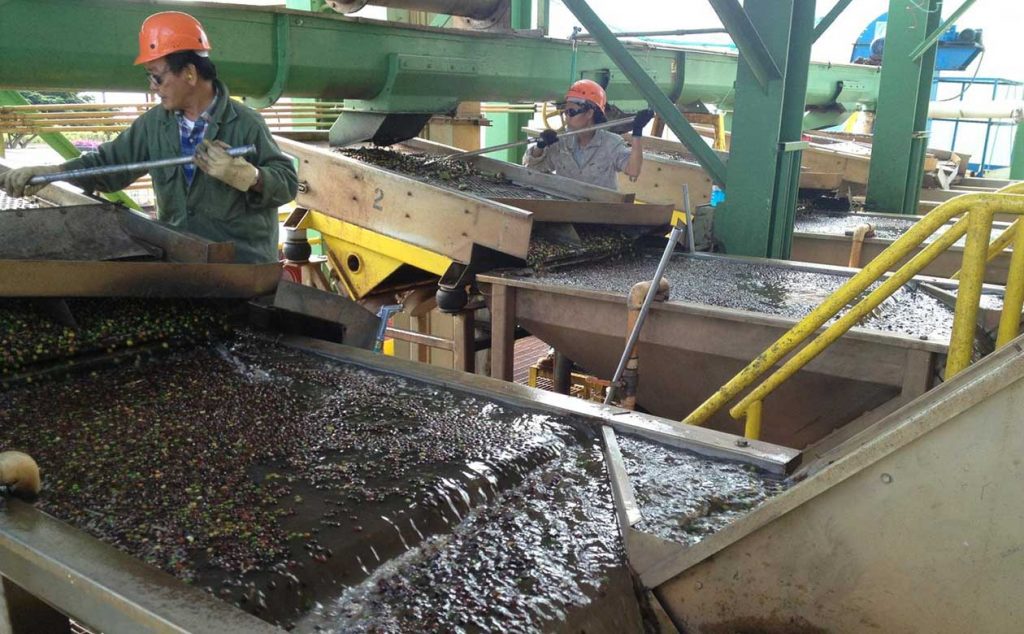
Hawaii’s rainfall is generous, but responsible water use is still an essential sustainability practice. Our farm uses efficient irrigation systems, and because we only use water to process harvested cherries, it can be easily filtered and then reapplied to the coffee fields. These systems work in harmony with the natural rainfall patterns of our island.
Sustainability Certified
Our commitment to sustainable practices and safe, healthy working conditions is triple certified. Our 100% Hawaiian Coffee proudly carries three unique distinctions from leading sustainability advocates.

The Relationship Between Climate, Sustainable Farming, and Coffee Quality
Climate creates the foundation for healthy coffee plants, but farming practices determine how well that foundation is protected. Kauai offers mild temperatures, abundant rainfall, and steady trade winds that keep trees happy and healthy.
When we combine these natural advantages with efficient water use, thoughtful orchard management, and responsible environmental stewardship, the result is a resilient orchard and coffee that tastes like paradise. Shop our complete collection of triple certified 100% Hawaiian Coffee now.


